
The Ordinary Progress Behind Extraordinary Stories
When people ask how the writing is going, it's tempting to talk about the milestones.
An award.
A shortlist.
A new script.
An encouraging conversation.
They're the moments that naturally find their way onto websites and social media. But they only tell a small part of the story. The truth is that most of writing happens all on your own.
It happens before work, while the house is still asleep. It happens late at night when a scene still doesn't feel quite right. It happens when you realise the dialogue you've been happy with for three weeks suddenly isn't good enough anymore.
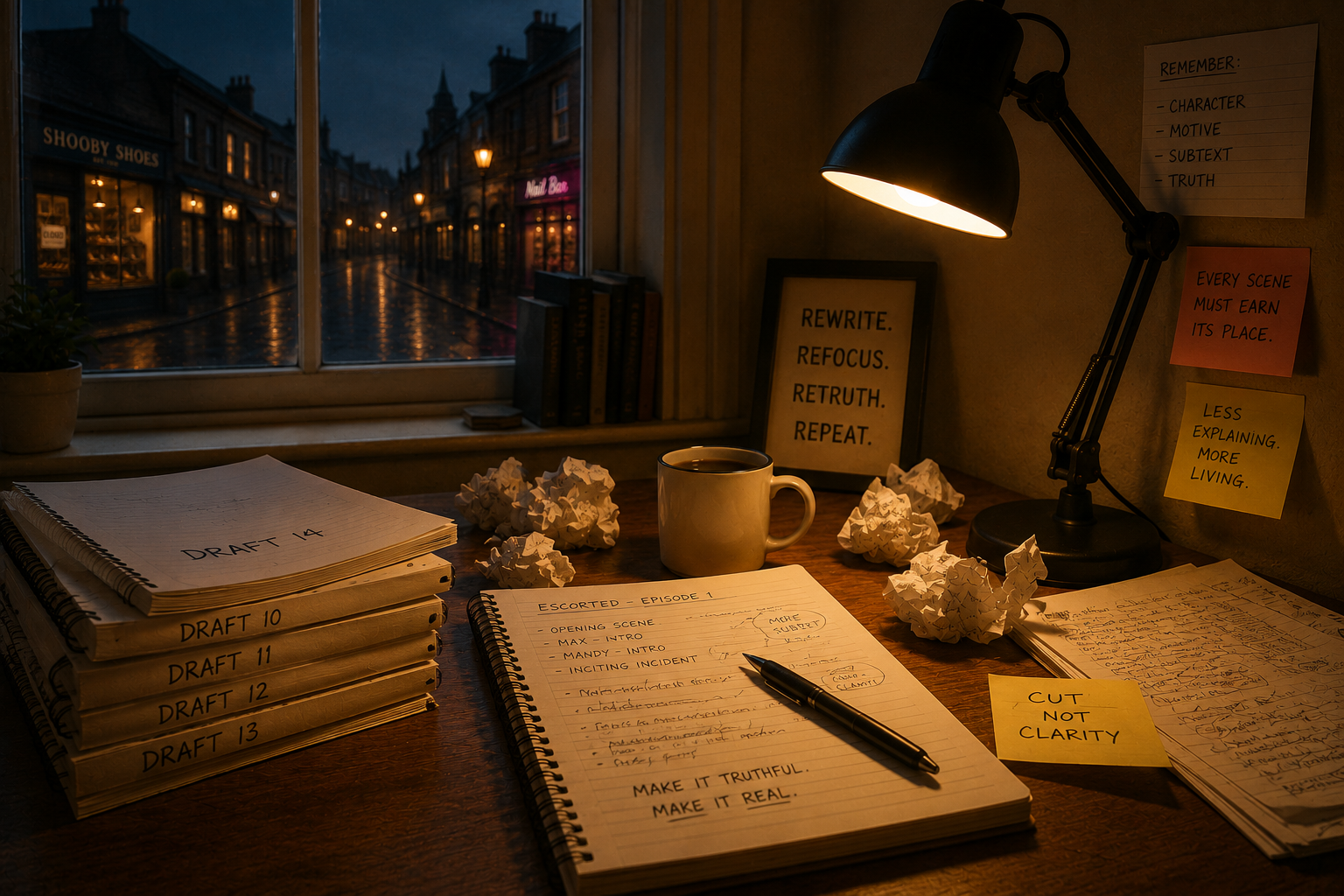
It happens in the twelfth draft. Then the thirteenth. And now the fourteenth.
There are no headlines for deleting five pages because you've finally found a better way to tell the story. No announcements when a character suddenly feels more honest, or a scene becomes shorter because it no longer needs to explain itself.
That's the progress nobody sees.
For me, writing has always been about ordinary people facing extraordinary circumstances. Whether it's a novel like Certified or an original television drama like Escorted, the process remains remarkably similar. Research. Observation. Patience. And a willingness to rewrite until the story feels truthful.
It's not always exciting. It can certainly be frustrating. But every draft teaches you something the previous one couldn't.
I'm proud that Escorted has attracted encouraging industry interest along the way, but those moments aren't the work. They're the result of the work.
The work is still ongoing. One page at a time.